
VARDLYX Flight Computer
- Online & Offline Operation
- Geofence Detection & Reaction
- No-Fly Zone Protection
- Multi-Channel Data Transmission LTE/2G
- Telemetry & Remote Control
- Multi-Level Management Panels
- Onboard Flight AI
- Data Exchange with SPPE Standards
- Multi-Mode Alert System
- Connection via USB / UART
- Encrypted Communication
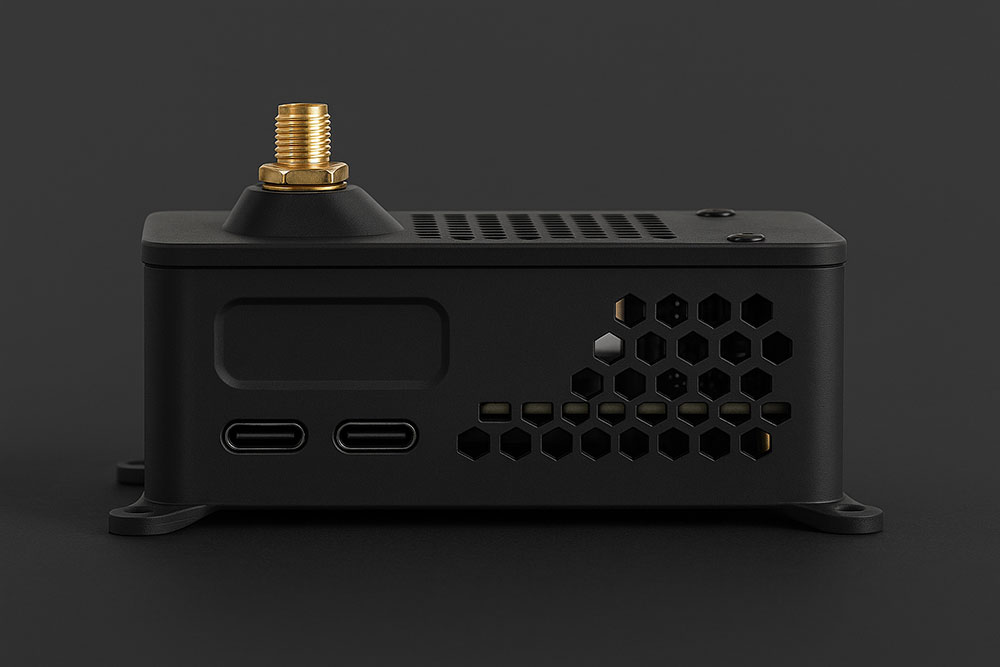
VARDLYX is an advanced and integrated solution for tracking, managing, and securing drone flights. By combining onboard flight AI, multi-channel communications, and multi-constellation positioning, it delivers a practical answer to the growing challenges of UAV operations in Russia and worldwide.
VARDLYX is designed to remain reliable under any circumstances. Whether operating in urban areas with full LTE coverage or in remote regions without internet, the system continues to function seamlessly. Its online and offline operation guarantees that even without network connectivity, the drone adheres to flight regulations and mission safety is preserved.
The core mission of VARDLYX is the continuous transmission of flight data to the SPPE system and, in return, the reception of the latest updates on no-fly zones. This two-way exchange ensures that both operators and regulatory authorities always have access to the most up-to-date information. As a result, VARDLYX not only guarantees flight safety but also provides full compliance with legal frameworks and supports the national initiative “Digital Sky of Russia.” This state-driven program aims to unify air traffic management and establish a comprehensive infrastructure for coordinating drones across the Russian Federation.
VARDLYX features real-time geofence detection and reaction. The system continuously monitors drone positioning, and when approaching restricted boundaries, it executes automatic responses such as Hold, RTL (Return-to-Launch), Land, or route adjustment. All these reactions are triggered in less than 0.1 seconds.
A key strength of VARDLYX is its ability to proactively prevent drones from entering restricted zones. Unlike traditional systems that only send warnings, VARDLYX actively corrects the flight path or halts the drone to avoid violations, ensuring public safety and minimizing risks.
In communications, VARDLYX relies on multi-channel data transmission. The primary channel is LTE/4G, with automatic fallback to 2G/SMS in low-coverage areas. All data is transferred through encrypted tunnels using AES-256 and VPN, guaranteeing both confidentiality and integrity.
Through its telemetry and remote control capabilities, operators can connect to their drones from anywhere in the world. Live data such as position, speed, altitude, and battery status are accessible, while critical commands like RTL or Land can be sent via MAVLink and applied instantly.
VARDLYX’s management structure is built around multi-level dashboards. The administrator panel is designed for authorities and fleet managers, enabling oversight of multiple drones, configuration of reactions, and access to detailed logs. The user panel provides simplified access for drone operators to monitor and manage their individual missions.
At the core of VARDLYX lies its flight artificial intelligence engine. This onboard processor analyzes flight data in real time and selects the best response to any emergency. With decision-making speeds under 0.1 seconds, the drone remains safe even without operator or server intervention.
To ensure reliable awareness, VARDLYX is equipped with a multi-mode alert system. Visual notifications on the dashboard (Toast), SMS messages in weak coverage zones, and VoIP calls for critical alerts work together as layered channels, ensuring that no alert is ever missed.
VARDLYX is more than just an add-on for drones—it is a fundamental part of the future Russian airspace ecosystem. With full compliance with SPPE standards, direct integration into the Digital Sky of Russia program, and its unique combination of safety, intelligence, and multi-layered connectivity, VARDLYX is paving the way toward a smarter, safer, and regulation-ready sky.
Dimensions
81 mm * 45 mm * 35 mm
Input Voltage
5V - 3A
Network Support
2G/3G/4G
Ports
USB-C * 2
USB-A * 2
Satellite systems
GNSS
GPS، GLONASS، Galileo، BeiDou
Supported Flights
Pixhawk / Ardupliot
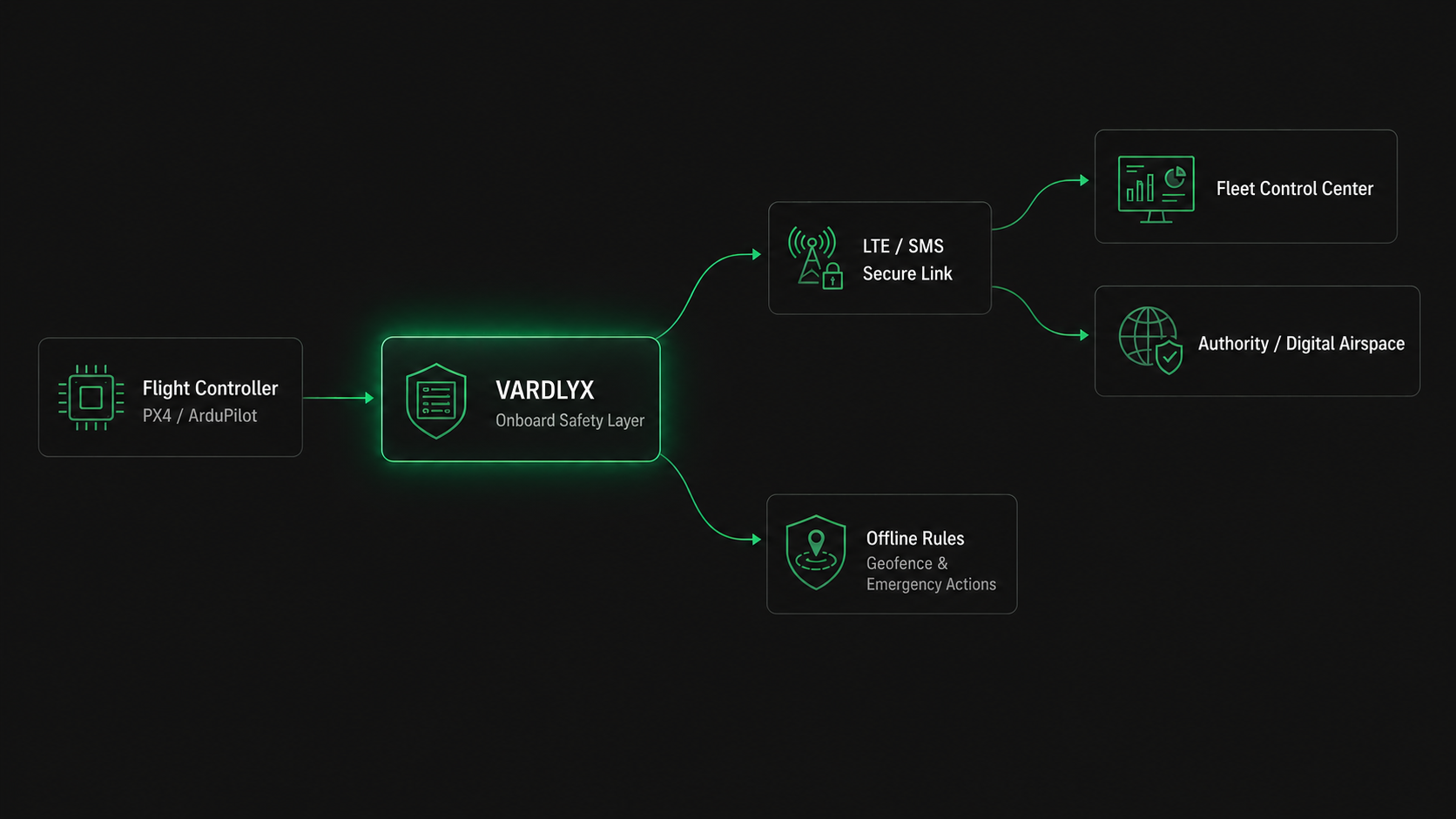
VARDLYX Work Diagram
| Event | VARDLYX Detection | Configurable Responses |
|---|---|---|
| Approaching a Restricted Area | Position and geofence boundary monitoring | Alert, speed reduction, Push Back or route adjustment |
| Unauthorized Entry into a Restricted Area | Geofence boundary breach detection | Hold, mission termination, RTH or forced exit |
| Internet Connection Loss | Link Loss detection | Continue offline rules, store flight data and report via SMS |
| Flight Zone Update | Reception of updated flight rules | Update the route or redirect the aircraft to an authorized corridor |
| Emergency Condition | Real-time flight status analysis | Guidance to a Safe Zone or controlled landing |
| Control Center Command | Access-level verification | Execute RTL, Hold, Land or an alternative route |
How VARDLYX Works
VARDLYX connects directly to the drone’s flight controller. Throughout the mission, it continuously receives and analyzes flight data and responds whenever necessary. This process takes place in four stages:
1. Collecting Flight Data
VARDLYX continuously receives essential data from the flight controller, including geographic position, altitude, speed, heading, battery status, link quality and mission information.
This allows the system to maintain a complete, real-time understanding of the drone’s operational status rather than relying solely on GPS coordinates.
2. Checking the Route and Flight Rules
The drone’s position and flight path are continuously checked against no-fly zones, altitude restrictions, approved flight corridors, safe zones and mission-specific rules.
If the drone approaches a restricted area or deviates from its assigned route, VARDLYX detects the situation before it leads to a violation or safety risk and prepares the appropriate response.
3. Transmitting the Drone’s Identity and Status
The drone’s identity, position, altitude, speed, connection status and other essential flight information are securely transmitted to authorized servers through mobile networks.
This allows fleet operators and monitoring authorities to identify the aircraft, understand its mission and monitor its current status. If the internet connection becomes weak or unavailable, essential information can be reported through fallback channels such as SMS.
4. Executing Safety Decisions Onboard
VARDLYX does more than transmit information to a server. It can also execute safety decisions directly onboard the drone.
When the drone approaches a restricted area, deviates from its route, loses communication or encounters an emergency, the system can perform a predefined action such as stopping the mission, holding position, rerouting, returning to the launch point, guiding the aircraft to a safe zone or initiating a controlled landing.
Because essential rules and response scenarios are stored onboard, safety actions do not depend on a continuous connection to the server or operator.
How VARDLYX Differs from a GPS Tracker or Telemetry Modem
A conventional GPS tracker primarily reports the drone’s location, while a telemetry modem transfers data between the aircraft and the control center.
VARDLYX goes further. It collects and transmits flight data, analyzes the operational situation, checks the route against flight rules and restricted zones, and directly executes a safe response when a risk is detected.
VARDLYX is therefore not simply a tracking or communication device. It is an independent onboard layer for UAV safety, identification, flight management and control.
VARDLYX is designed to remain reliable under any circumstances. Whether operating in urban areas with full LTE coverage or in remote regions without internet, the system continues to function seamlessly. Its online and offline operation guarantees that even without network connectivity, the drone adheres to flight regulations and mission safety is preserved.
The core mission of VARDLYX is the continuous transmission of flight data to the SPPE system and, in return, the reception of the latest updates on no-fly zones. This two-way exchange ensures that both operators and regulatory authorities always have access to the most up-to-date information. As a result, VARDLYX not only guarantees flight safety but also provides full compliance with legal frameworks and supports the national initiative “Digital Sky of Russia.” This state-driven program aims to unify air traffic management and establish a comprehensive infrastructure for coordinating drones across the Russian Federation.
VARDLYX features real-time geofence detection and reaction. The system continuously monitors drone positioning, and when approaching restricted boundaries, it executes automatic responses such as Hold, RTL (Return-to-Launch), Land, or route adjustment. All these reactions are triggered in less than 0.1 seconds.
A key strength of VARDLYX is its ability to proactively prevent drones from entering restricted zones. Unlike traditional systems that only send warnings, VARDLYX actively corrects the flight path or halts the drone to avoid violations, ensuring public safety and minimizing risks.
In communications, VARDLYX relies on multi-channel data transmission. The primary channel is LTE/4G, with automatic fallback to 2G/SMS in low-coverage areas. All data is transferred through encrypted tunnels using AES-256 and VPN, guaranteeing both confidentiality and integrity.
Through its telemetry and remote control capabilities, operators can connect to their drones from anywhere in the world. Live data such as position, speed, altitude, and battery status are accessible, while critical commands like RTL or Land can be sent via MAVLink and applied instantly.
VARDLYX’s management structure is built around multi-level dashboards. The administrator panel is designed for authorities and fleet managers, enabling oversight of multiple drones, configuration of reactions, and access to detailed logs. The user panel provides simplified access for drone operators to monitor and manage their individual missions.
At the core of VARDLYX lies its flight artificial intelligence engine. This onboard processor analyzes flight data in real time and selects the best response to any emergency. With decision-making speeds under 0.1 seconds, the drone remains safe even without operator or server intervention.
To ensure reliable awareness, VARDLYX is equipped with a multi-mode alert system. Visual notifications on the dashboard (Toast), SMS messages in weak coverage zones, and VoIP calls for critical alerts work together as layered channels, ensuring that no alert is ever missed.
VARDLYX is more than just an add-on for drones—it is a fundamental part of the future Russian airspace ecosystem. With full compliance with SPPE standards, direct integration into the Digital Sky of Russia program, and its unique combination of safety, intelligence, and multi-layered connectivity, VARDLYX is paving the way toward a smarter, safer, and regulation-ready sky.
VARDLYX Specifications
| Category | Specification |
|---|---|
| Processor (CPU) | Quad-core Cortex-A53 @ 1.5–1.8 GHz |
| Memory (RAM) | 4 GB LPDDR4 |
| Networking | LTE Cat 4 (DL 150 Mbps / UL 50 Mbps), UMTS/HSPA+, GSM/EDGE |
| GNSS Support | GPS, GLONASS, BeiDou, Galileo (L1), 1–10 Hz update rate |
| Autopilot firmware | PX4, Ardupilot |
| Interfaces | 2 × USB-C OTG (USB 2.0), 2 × USB-A (USB 2.0), 1 × GPIO |
| Antenna Ports | 2 × u.FL (LTE Main & Diversity/MIMO), 1 × u.FL (GNSS), SMA connectors optional |
| Power Input | 5V / 3A (XT30 connector or USB-C), DC-DC support for 9–55V flight batteries |
| Power Consumption | ~3.5 W average, ≤5.5 W peak |
| Operating Temperature | –40 °C … +70 °C |
| Dimensions | 81 × 45 × 35 mm |
| Weight | ~78 g (Without Antennas) |
| Alert System | Multi-mode (Toast notification, SMS, VoIP calls) |
Why VARDLYX?
| Capability | Conventional GPS Tracker | VARDLYX |
|---|---|---|
| Position Reporting | Supported | Supported |
| Flight Controller Integration | Usually Limited | Supported |
| Full MAVLink Telemetry | Limited | Supported |
| Onboard Geofence Enforcement | Not Supported | Supported |
| Automatic Offline Response | Not Supported | Supported |
| Flight Command Transmission | Usually Unavailable | Supported |
| Multi-Level User Management | Not Supported | Supported |
| Event and Decision Logging | Limited | Supported |
| Airspace Infrastructure Integration | Not Supported | Integration-Ready |
| Alternative Routes and Safe Zones | Not Supported | Supported |
Key Features of VARDLYX
Below are the key features of VARDLYX. These capabilities set it apart from other products, delivering a unique combination of safety, reliability, and intelligent control for multirotor operations.
Online & Offline Operation
Ensures safe flights even without internet, using preloaded maps and onboard AI
Geofence Detection & Reaction
Automatic responses such as Hold, RTL, Land, and Push-Back
Multi-Channel Data Transmission
LTE/4G with 2G/SMS fallback and fully encrypted links
Telemetry & Remote Control
Live monitoring and MAVLink commands accessible from anywhere
Multi-Level Management Panels
Dedicated dashboards with different access levels for operators and authorities (Admin & User)
Onboard Flight AI
Ultra-fast response (<0.1s) to threats and emergency conditions
Compliance with SPPE Standards
Full support for ASTERIX CAT-129 and integration with MonitorSoft
Multi-Mode Alert System
Toast notifications, SMS, and VoIP calls to ensure critical alerts are never missed
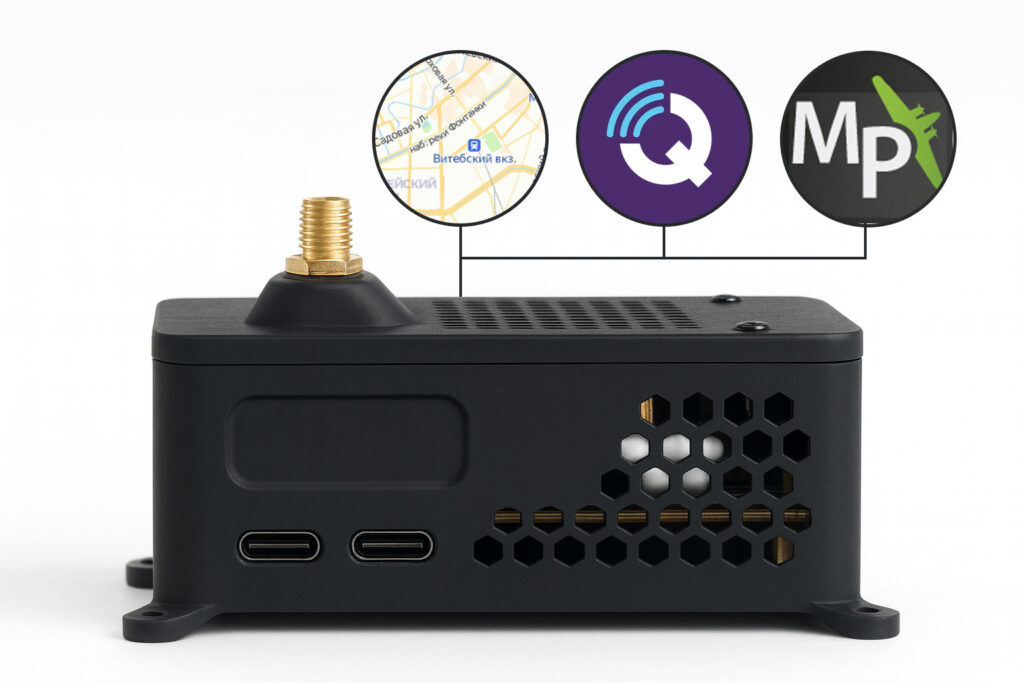
Navigation and control solution
Navigation and control solution enabling precise tracking, geofencing, and secure management for multirotor drones.
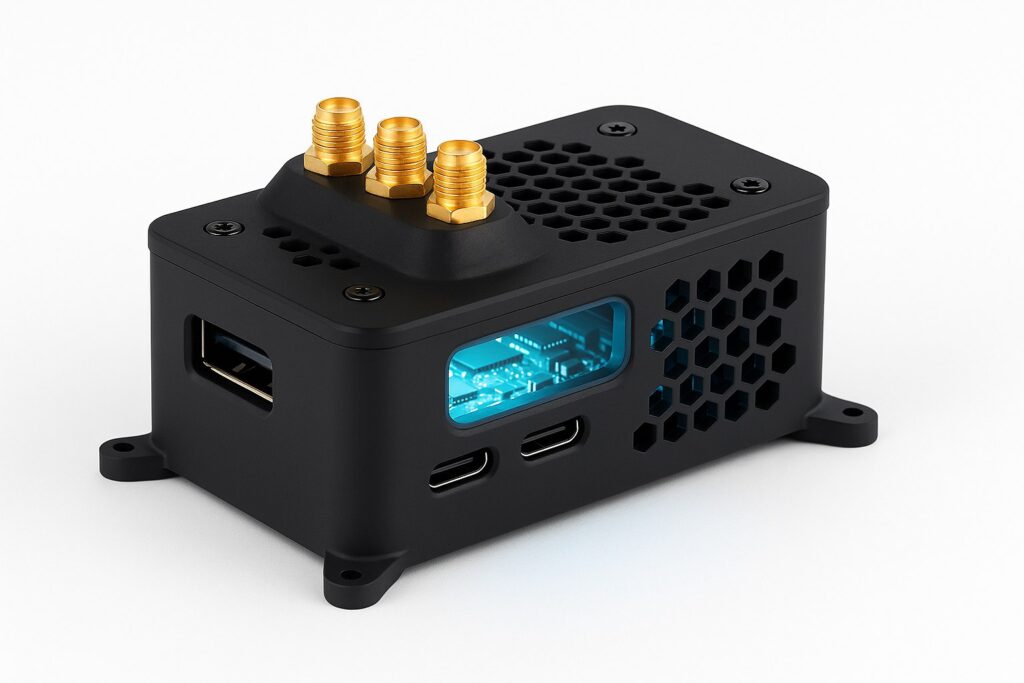
Independent Computer & GPS
Independent computer and GPS enabling autonomous operation, precise navigation, and reliable performance.
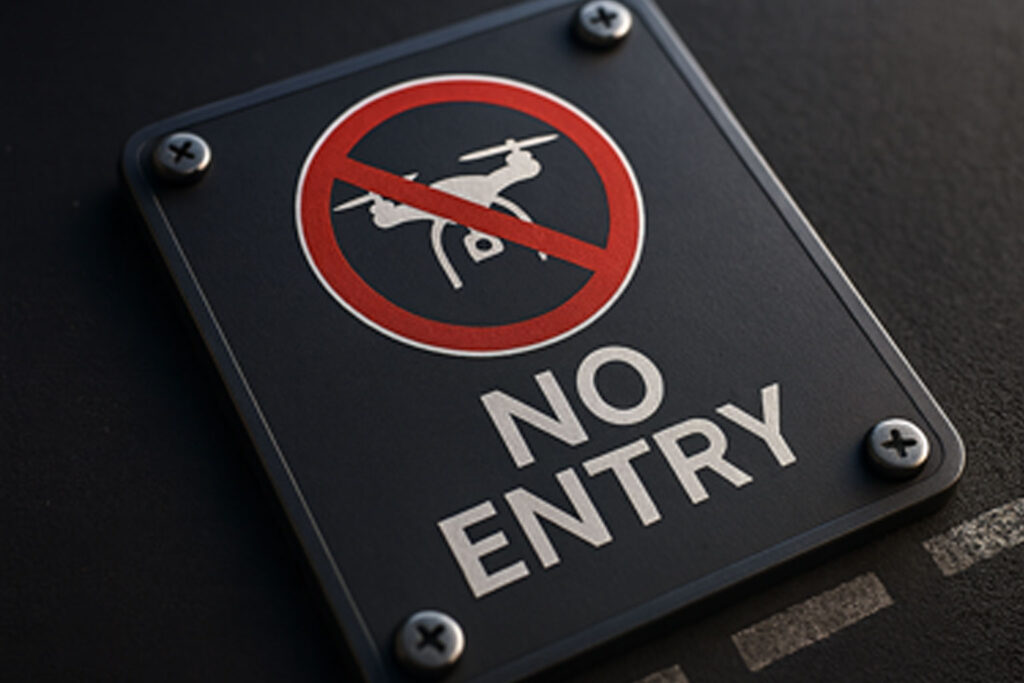
Prevent Entry Into Restricted Areas
Prevent entry into restricted areas by enforcing geofencing rules and automatically adjusting drone flight paths.

SMS Reporting on Link Loss
SMS reporting on link loss ensures continued status updates and location tracking without internet connection.

Encrypted Communication
Encrypted communication ensures secure data transmission, protecting drone control from unauthorized access.

Connection via USB / UART
Connection via USB and UART enabling seamless integration with flight controllers and reliable data transmission.